
Plastic LPBF 3D Printing
Transform Your Vision – into Production.
With Farsoon’s Advanced Plastic 3D Printing Technology
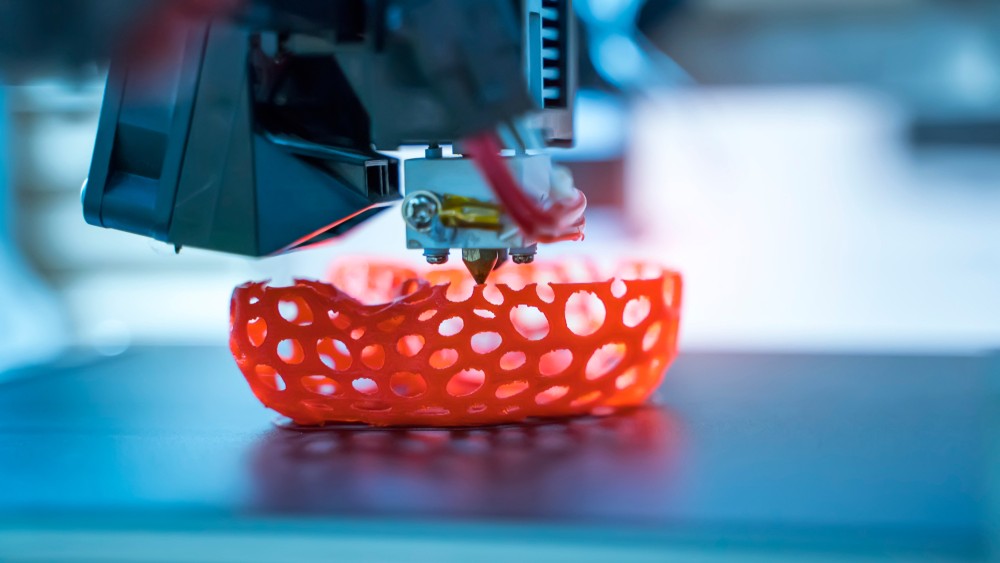
Plastic Laser Powderbed Fusion
Derived from a novel technology developed at the University of Texas Austin Incubation Center during the mid-1980s’, Plastic Laser Powderbed Fusion is now a popular choice for direct end-use part fabrication and rapid prototyping amongst many manufacturers and engineers. Based on a digitalized 3D model, this professional-grade additive manufacturing (AM) technology uses a high-power industrial laser to sinter plastic powder particles into a solid structure with a layer-by-layer process:
- A layer of plastic powder material is evenly spread onto a powder bed using a roller or blade.
- The laser melts the powder exactly within the pre-defined area of 3D model sections to create the first layer of the build.
- A new layer of powder material is evenly distributed over the sintered surface.
- The lasers melt each successive layered materials to the sintered layers underneath until the imported 3D component is completed.
Why Plastic Laser Powderbed Fusion 3D Printing?
Faster design-to-market cycle.
The advanced Plastic Laser Powderbed Fusion technology offers endless possibilities with complexed geometry, structural integration, or even generative design that can completely overturns the concept of a traditional design process. The user is able to create the optimal design in a very short time without the limitations of traditional processing and material options.
Excellent mechanical properties for functional applications.
Thanks to the robust laser sintering, the Plastic Laser Powderbed Fusion production is a uniformed, stable and repeatable process that ensuring the ultimate mechanical performance and surface quality of the work piece – making it an excellent choice for functional end-use component production.
Flexibility & Cost Efficiency.
Plastic Laser Powderbed Fusion technology offers a flexible, cost-efficient alternative for low volume production without the needs for expansive tool-making compared to conventional manufacturing process. The simplified sintering process also features high material utilization rate without the requirement of binders or agents.
Production Scalability.
Plastic Laser Powderbed Fusion technology is a valuable series production tool for many industrial applications and products. With Farsoon’s latest innovations in Laser Powderbed Fusion focusing around continuous manufacturing (CAMS Concept) and next-level production speed (Flight® Technology), we will be bringing the technology one step closer to production scalability.
Years’ Experience in LPBF Technology
Large Build Size achievable
Get Started with Your LPBF Production
Farsoon’s Total Solution for Plastic Laser Powderbed Fusion
Address your needs from material innovation, higher levels of productivity, improved feature details, enhanced operational efficiency to scaled manufacturing, Farsoon offers a wide range of machine portfolio featuring advanced plastic laser sintering technology from a compact, versatile system to modular, factory layout production platform.
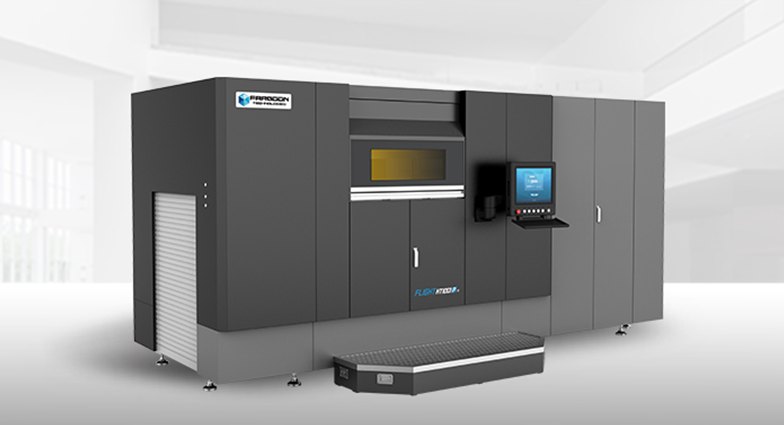
Flight HT1001P
- Quad Fiber Laser.
- Quality Engineering Parts.
- Open + Modular.
- Build Volume | 1000×500×450mm
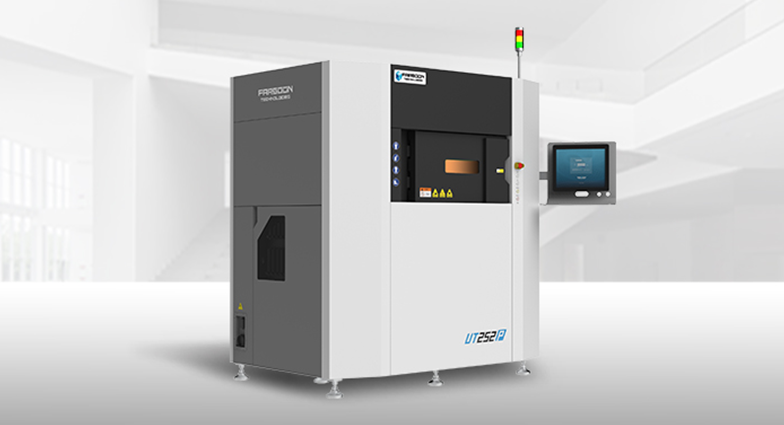
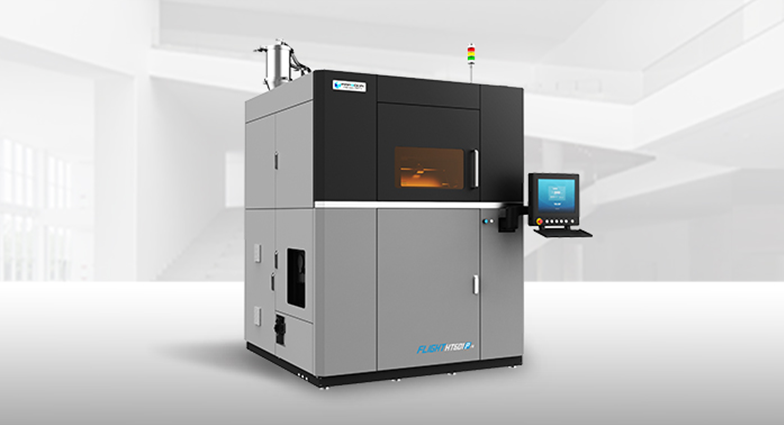
Flight HT601P-4
- Maximized Productivity.
- Precision + Part Quality.
- High-Temperature Capability.
- Build Volume | 600×600×600mm
Success Stories from Our Customers
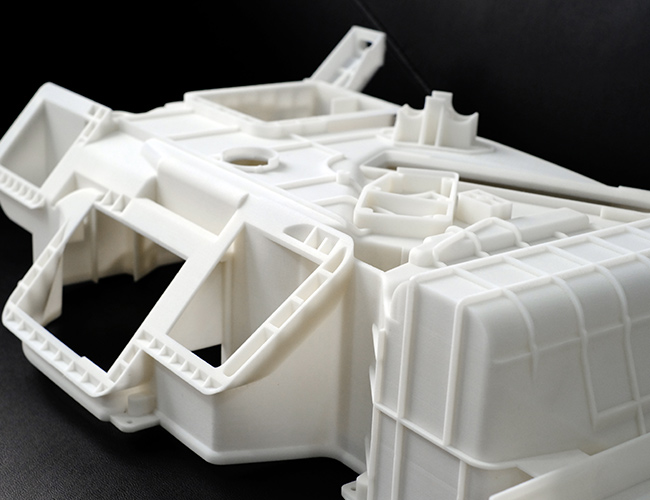
Large-format Plastic 3d Printing: 1m HVAC Housing produced in one ingle-piece
- Partner: SAPW Automotive
- Machine: HT1001P
- Material: FS3300PA (PA1212)
- Size: 950 x 423 x 207 mm
- Build Time: 10 Hours
Farsoon Technologies in collaboration with automotive partner SAPW has printed a single-piece polymer automotive HVAC (Heating Ventilating Air Conditioning) unit on the HT1001P CAMS system. Compared to the traditional process including CNC and Silicone Molding, the additively manufactured HVAC features structural integration, improved performance, accelerated development cycle, and reduced manufacturing cost.
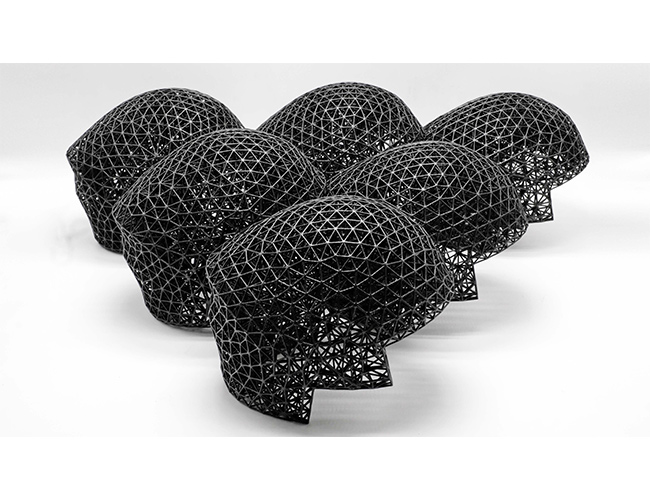
TPU Helmet for 2022 Winter Olympic Bobsled Team
- Partner: Chinese National Bobsled R&D Team
- Machine: Flight® HT403P-2 Dual-laser system
- Material: Wanhua Chemical Group, WF-PU95AB TPU material
- Build Time: 2 helmet linings produced in 7.5 hours
The bobsled helmet lining is fabricated with Wanhua Chemical’s specialized TPU material developed for the superb performance under the extreme temperature, and produced by Farsoon’s dual-laser Flight® Technology to achieve greatly improved impact strength, fully customized design, and accelerated design to manufacturing process.
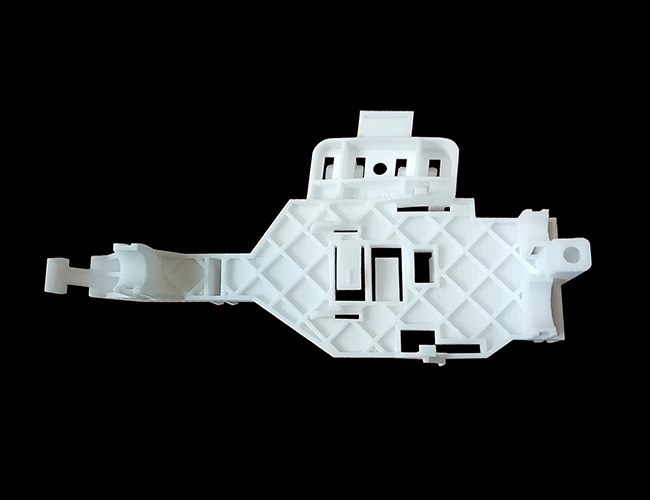
Manufacturing Tool For Automotive Functional Prototyping
- Partner: FAW-Volkswagen
- Machine: HT403P
- Material: FS3300PA (PA1212)
The brackets for bumper guides required a small batch of 30 pieces for functional testing, this quantity is challenging using silicone molds due to the complicated process of manufacturing, time consumed, and high cost of tool-making and manual labor. Compared to traditional silicon molding, the plastic laser sintering process achieved design to physical part time of only 14 hours compared to 78 hours, and a total of 72% production cost saving, of which the labor cost decreased from 1000 USD to only 60 USD.
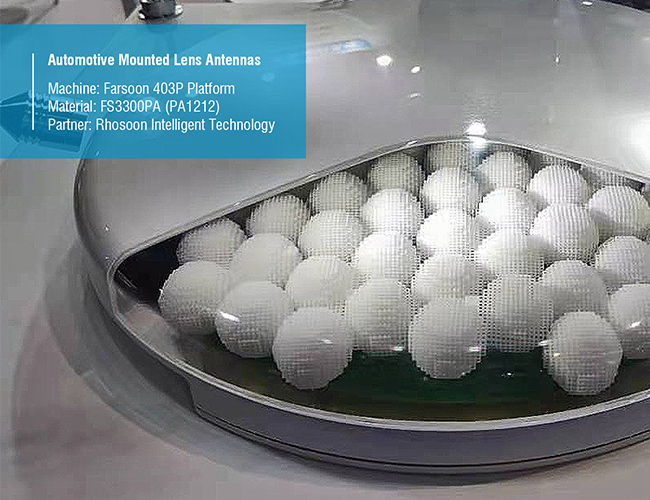
Automotive Antenna System
- Partner: Rhosoon
- Machine: SS403P
- Material: FS3300PA (PA12)
- Size: 80 mm Diameter each
- Build Time: 48 pieces produced in 48 hours
The Luneburg lens design features a multi-layered structure within an extreme compacted volume, with varied layer thickness and many detailed features to offer different electromagnetic wave refraction by each layer. Using Farsoon 3D printing technology Rhosoon is able to significantly reduce design-to-market time, and simplify the manufacturing process by additively producing the complex antennas structure with fine detail resolution and quality control. It also enables Rhosoon to develop highly customized 3D printed antennas designs to best suit each application’s needs.